Author: Jon Elkon

  • BLACKMAIL AND GAMBLING and so are you!

    Part Two of Cannibals and Christians….
    I am a gambler, a victim of blackmail and protection rackets, and so are you. Have been for years! Blackmail, protection rackets and gambling, addicted I am. By law. And so are you.
    First, some definitions.
    Gamble: “take risky action in the hope of a desired result.” (Merriam-Webster) [ I ] to do something that involves risks that might result in loss of money or failure, hoping to get money or achieve success (Cambridge Dictionary)
    Blackmail: “the use of threats or the manipulation of someone’s feelings to force them to do something” (Merriam-Webster)
     
    A protection racket:”… is a scheme whereby a group provides protection to businesses or other groups through violence outside the sanction of the law. Through the credible threat of violence, the racketeers deter people from swindling, robbing, injuring, sabotaging or otherwise harming their clients.” ( Wikipedia)
    Yesterday they told me that unless I cough up an immediate £198, I will no longer enjoy the protection I have had for the last year. My Home Insurance will run out. Ok, I know all insurance is a gamble – and the House always wins! Ever heard of a poor Casino? Or insurance company?
    Your essay task today:: To what extent is Home Insurance and/or Car Insurance a Gamble; Blackmail; a Protection Racket? The answer by the way, the same answer as to all essay questions which include the phrase “To what extent” is, to some extent. Does the same apply to car insurance as to home contents insurance? Buildings insurance?Here are some thoughts for your essay.
    Home insurance: Well, as far as contents are concerned, there is no law saying I am compelled to take out insurance. Therefore by NOT insuring the contents, arguably, I am taking a risk, a gamble. But obviously, I am not laying money out. The contrary. Although if I’m robbed, you could say that’s the price of the gamble. Buildings insurance is different. Am I right in saying I have to get buildings insurance by law? Too lazy to Google. If so, does that fall under the definition of a Protection Racket? Perhaps Car Insurance is a better example, as that has to be taken by law.
    Great for insurance companies. The odds are so heavily stacked in their favour. Ironically LV, one of the largest providers in the UK took a gamble last year (on Heritage, whatever that is) and managed to turn profit of £124m in 2015 into a loss of £49m in 2016. Whereas the largest insurance company in the world, China’s Ping An insurance group “… generated $106.6 billion in revenue, $9.5 billion in profits and its market capitalization stood at $100.8 billion. The tech-driven company boasted of 131 million customers at year-end 2016, up 20% from the beginning of the year, with nearly a quarter of the newcomers coming in online.” (Source: https://www.forbes.com/sites/ashleaebeling/2017/05/24/2017-global-2000-the-worlds-largest-insurers/#61b36b614ec4 Now that’s a lot of victims. The second largest, according to Forbes, is Allianz, followed by AXA.
    Monster cannibal companies. So now, dear essay writers, let’s think about how they’re financed.
    By gamblers. The share market is the biggest casino in the world, right? Millions of “investors” which may be individuals, companies, your pension providers buy, sell, buy, sell through computers which make decisions as to buy, sell, buy, sell each fraction of a second. See previous blog.
    Yes I am a little obsessed! And slowly getting bored with these “ain’t it awful” posts so I promise to try to stop being a gnat in the ear of international capitalism, lest I am suspected to have Communist or Socialist sympathies…or allegiances even. Nah. I promise to be funny next time. Next life or next Blog. Whichever comes first.

    This Autumn le petit mort

    Perhaps

    Or was that

    Rainy gloomy messy thing

    Just passed

    The last summer?


    Will

    The wistful world

    At last reject

    Us, This virus which

    Naturally selected

    Infects

    Until

    This earth, disturbed, stirs

    And with a mighty

    Yawn

    Enacts

    Antibodies…


    (Do I care, dear?

    I’m outta here!

    NO fear!

    Bye bye!

    One wing detached, see me fly!)

    OK just for you – I PROMISE my next blog will be all funny, cheerful and totally irrelevant. Unless, of course, Moore is elected in Alabama, hard Brexit is assured, or my operation goes wrong.

  • Love? Or not! What have you got? Why? Why not?

    I’ve realised! Understood! Lying awake, as I do at 3am, mind wandering and roaming and tying itself up in knots, suddenly I understood how and why relationships work, or don’t work, or nearly work, or work for a while. So many youngsters I know are so goddamned confused, messed up. Not just youngsters! As I lay awake thinking about them lying awake in utter misery – been dumped! Or, did the dumping! And, whose fault?

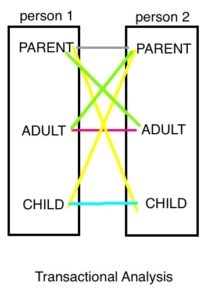
    Study the diagram above. On the left, a blokie. On the right, a woman. Could be another blokie, obviously, and the leftie could be another woman. Or a wombat, or a tree, whatever. What’s the female p.c equivalent of blokie?.

    As you can see, each is divided into 3 parts. Great number, three. Let’s call it the Tripitaka. Or the Trinity, if you’re not a Buddhist.

    Head: the intellect, the ability to make decisions based on logic. Planning, seeing danger and working out costs and benefits.

    Heart: the emotions, the uncontrollable joy or fear or longing. Obviously, linked viscerally to –

    Loins: sex. Horniness.

    And next to each, a number. Here’s where I go into stereotypes, which as usual, do not cover all possibilities. Because so many men and women do not conform to the numbers.

    For the stereotype man, his loins come (sorry) first. Led by the loins, the male strides where his dick decides. Every – is it six seconds? – a man thinks of his willie. For the stereotype woman, her loins come third.

    Here’s interesting; For the M, head comes last. For the F, second. And her loins come third.

    This is often nonsense, of course. And could be the cynical male view. Of course there are Fs who are C1, M who are B1, M and F who are A1.  Also, people change over time, priorities change. Natures change.

    I am reminded of PAC. Does anyone remember I’m OK You’re OK “I’m OK – You’re OK[1] is a 1969 self-help book by Thomas Anthony Harris. It is a practical guide to transactional analysis as a method for solving problems in life.” https://en.wikipedia.org/wiki/I%27m_OK_–_You%27re_OK

    Another Tripitaka. The Parent: Do what I say! Why? Because I say so! Is this the equivalent of the prick?

    The child: Don’t wanna! Boo hoo! Gonna do what I want to do! Is this the heart speaking?

    The Adult: Now just let’s think about this and discuss it sensibly. Is this, then, the head?

    As you can see, the transactions take place within several permutations. Including two people who  are in the throes (and throws) of a relationship. So which works best? Harris, naturally, asserts that two people in any transaction are best interacting Adult to Adult. That if any of the other interactions are occurring then, he says, bring it back to the adult. Head to head. And practically anything else is bound to fail. If one person is C1 and the other C3, problem. So that’s our stereotypical couple being Martians and Venusians obviously.

    Earthlings, however, adapt. So my suggestion is, be an Earthling. Identify the 1, 2, 3 and the A, B, C!

    Somewhere in this blog is the opportunity to make a fortune. Listen! Harris made a fortune, wrote his book and spawned a massive industry of Transactional Analysis. And how many other Americans have made huge fortunes by stating the obvious in different words which sound utterly like a New Terminology. Or even English people now and then (Alistair Smith for example with his Accelerated Learning guff, which any sensible teacher had been following since 1812). So, if you have a PHD in something vaguely relevant, pretend to do some research on the Relationship Tripitaka, publish, make a million and send me 10%.


  • The Argument for Cannibalism

    The Argument for Cannibalism

    Norman Mailer is dead. This is not his fault – probably. He has been dead since 2007, apparently. In his time he was a terrific novelist, a great essayist, and frequently a crashing bore. Reminds me of me. Except for the “great” part. And a few days ago I was browsing in a charity shop (you never know – Antiques Roadshow has so many examples of guests who found a Lalique potty or an ancient Roman toast rack worth thousands in their local Mind shop. All I ever find in the way of rare and ancient things there is the Assistant, who, I’m led to believe, is not for sale. Mind you I’ve never asked) and picked up a copy of Mailer’s collection of stories, essays, articles and poems, Cannibals and Christians. (Sphere books 1969. First published by Andre Deutsch, my publisher once!) (Why do I love brackets? What have they ever done for me?). The reason I bought it was to find out whether this highly informed, intelligent, witty and let’s face it, well connected literary lion had anything relevant to say to the world of 2017. Guess what. Damn right he does.

    DEAD MEN TELL TALES

    Mailer divides the world into two types of people, Cannibals and Christians. I’ll start with the latter first. He says “…we are all of us Christians. Jews, liberals, Bolsheviks, anarchists, Socialists, Communists, Keynesians, Democrats, Civil Righters, beatniks, ministers, ….” etc etc etc. In other words, everybody except for right-wing diehard “Christians”, i.e. Bible-bashers, literalists, and others who claim to be Christians. And of course, alt-right Trump supporters. Well, he didn’t mention Trump by name, of course, as that gentleman was busy learning how to get away with being a criminal from his father  at the time and perhaps Mailer didn’t know him. So by “Cannibals” he means the extreme Right, “…which runs from staunch Republicanism to the extreme right wing, and then half around the world through the ghosts of the Nazis, ….(believing) one can save the world by killing off what is second-rate…”

    Obviously then,  “Cannibals” prey upon the “Christians” and eat them. Which reminds me of someone I’ve mentioned in an earlier blog – Nicholas van Hoogstraten, “The Most Evil Man in the World” (Google him) – and a man for whom – Nicholas, if you’re reading this! – I never felt anything other than an awed affection. Who said, the world is divided into Predator and Prey and if you’re not one, you’ll be the other.  Except, in this interpretation Prey is ultimately passive and unaware of being stalked. Mailer makes the point that the “Christians” at least have their own institutions, and the Cannibals are constrained to provide an appearance of putting some protections in place for the poor little Christians. Otherwise they don’t get re-elected.

    Another target of our prescient dead man are the architects, the property developers, the builders! Oh Norman, if thou wert living at this hour. Thou wouldst haveth been rubbingeth thy hands with glee at how right you were. The horrible brutalisation of my beloved city, so well described nearly fifty years ago. (Rant alert! Rant alert!) Why don’t the brutal greedy tasteless slobs who want only to make money from knocking down lovely historic buildings full of ghosts and memories and replace them with soulless tasteless heaps of glass chrome and steel just fuck off and die? Why do they think we are fooled when they slaughter the soul of a building, leaving just the facade on the street to hide the foul and disgusting deeds behind? Why do they think we need more multimillion pound apartments when our homeless slouch past the empty mansions in Chelsea and elsewhere, left there just to increase in value year after year so that the piggy owners can sit on their yachts in the Med with their champagne? Why do they have to make their horrible visions of Brutalist 1984 heaven loom over our beautiful dreaming Thames, from the tops of which they can watch and laugh at us as we scrabble over ourselves to make more money for them. The Cannibals eat our souls, rip out our concepts of beauty and history, consign us all to the slavery of Stuff, and the longing for more Stuff. Bah. It’s enough to make me a revolutionary, if I had the energy.

    So far so creepily correct. Perhaps 1969 is not so far away

    CANNIBAL CITY

    What a mess! These tombstones, mobile phones, fingers pointing contemptuously at God, towers of Babylon, this is ego a go go, a penis park, a cacophony of arseholes farting in our faces. Yes I know the place was largely flattened in the war so we had to put something there. But really, something so very ugly? Actually I wouldn’t mind if they kept their architectural excrescences within the boundary of their wall. But the horror is spreading, the Cannibals are colonising.

    Well, as Great Britain becomes Little England after Brexit perhaps they’ll all go away. And the sooner the better.

    CANNIBAL CHISWICK

    Meanwhile in one of the Cannibal Colonies, Chiswick in West London, boxes of people proliferate. Chiswick has become flatland, with all sorts of previously commercial buildings being taken over and turned into apartments, or flattened and hideous boxes put up in their place. Please do not think for a minute that these are “Affordable Homes”. No. These are the profit-projects of filed-tooth cannibals, voracious profiteering landlords, dunderheaded developers. Probably. Well, as evidence, look at them!

    This is Box 1, on the High Road. This institutional brown thing, like a cardboard container just delivered by Amazon, looks exactly like something temporary, made-up, ephemeral. A container for humans constructed out of tin-thin breeze-blocks and coated in a veneer of pretend brick. Amusingly, the brick veneer is obviously mounted in sheets, because in many places on the facade you can see the joins. I haven’t bothered to research how much a two bed apartment in this cardboard dwelling costs – probably as much as a manor house in Shropshire.

    Which is probably where the architect lives. He or she is no doubt giggling into their Prosecco about how easy it is to sell shit in London.

    Box no. 2 was formerly the headquarters of the Institute of Advanced Motoring. Now, it’s another jumble of Ikea-flavoured minimalist cells for the slaves of the Cannibals, from which they will sally forth daily to manufacture money for their greedy masters.

    So, once a place for advanced motorists, now slave barracks.

    Dear Ghost of Norman, behold how thy prophecies have turned true…

    Number 3 is a sad story. Once there was, on the corner of Marlborough Road and Chiswick High Street, the most amazing Art Deco Service Station since the Bluebird in Kings Road. Beautiful tiles, cast iron, evocative signage, a place built to pay homage to the marriage of automobile and the A4.

    Now it’s this:

    Glass, brick, concrete boxes. On the ground floor, Harvey Nichols have their admin offices. Above the “shop”, 2-bed apartments were originally sold for £400,000. Now no doubt much more.

    Profit factories for voracious fat cats.

    Is the only way to defeat the Cannibals to eat them all?

    Illustration: http://en.kllproject.lv/cannibals-in-germany.html

  • 5-Star REVIEWS for Sally’s Road!

    5-Star REVIEWS for Sally’s Road!

    From Readers’ Favourite, an independent website which reviews new books

    100% OF AUTHOR ROYALTIES IN AID OF CANCER RESEARCH UK

    Reviewed by Christian Sia for Readers’ Favorite

    “A wonderful blend of humor, satire, and drama, Sally’s Road by Jon Elkon opens a whole world of entertainment to readers, with deftly developed characters and an interesting plot. The reader is introduced to Sally, a cancer patient whose condition seems to be rendered more painful by her failing marriage and her mundane existence in an estate in Shropshire, England. Her life is uneventful until a young girl, Annie, who looks like a tomboy, suddenly arrives at the estate with her story of kidnap and murder. Now, Sally’s life experiences a dramatic change as she connects with the tomboyish young girl. The reader is in for a story of romance with unexpected twists and exciting turns.

    “In Jon Elkon’s masterful hands, a mundane, painful experience is transformed into a work of entertainment. The story reads like journal entries told in the protagonist’s own words, and this alone makes the reader feel like they are part of the narrative. The tone is light and detached, humorous, but not without the emotional power that pulls the reader in. It opens with a peculiar explanatory letter that tells Graham, who has been a part of the protagonist’s life, the reason for which this story is written and, as one reads, it feels like the narrator is sharing a part of her world with this special person in her life.

    “Sally’s Road features a unique style of writing and the point of view comes across powerfully and unmistakably compelling. I enjoyed the humor, the excellent pacing, the strong characters, and the way the author builds the scenes. Sally’s world is vividly portrayed in the story and readers get revealing glimpses of what it is like to live with a terminal illness. This is an immersive and inspiring story, crafted with awesome dialogues and quirky descriptions of places, characters, and scenes. You won’t put it down.”


    Reviewed By Arya Fomonyuy for Readers’ Favorite

    “Sally is suffering from cancer and her days are gloomy. At the beginning of the story, the narrator draws the reader’s attention to the setting, a Sunday without church bells ringing and no usual sounds heard in the rich estates of the stagnant backwaters of Shropshire, England. But she can hear the lawnmowers. Her marriage isn’t working out well and she finds herself curiously reaching out to neighbors and people who are weird in some sort of way. Things change when teenager Annie stumbles into her estate — with a story involving kidnapping and murder. What follows is a ride that will keep readers laughing throughout the narrative and caring about the characters.

    “Written in the form of journal entries, Sally’s Road by Jon Elkon is a riveting story of love and hope and friendship, and an unusual romance. The author throws in some elements of crime and makes an awesome seasoning with satire, drama, and comedy, transforming a grim experience into an interesting read. I was hooked from the beginning by the use of the epistolary style, such as in a humorously written letter in a tragic tone, letting the reader know what the story is all about. “Dear Graham, It is only fair that I send you this, my Journal, my misery memoir, my Cancer Diary, my Dice with Death so that you can find out why the tabloids will soon be describing me as a murderer, a rapist and a thief.”

    “The reader is caught up in the emotional tide right off the bat and there is no escape from it as they are drawn irresistibly into Sally’s morbid world. But that isn’t all there is to find in this gripping story. The rich writing reflects the culture within which the story evolves, captures the setting in clear images, and creates very exciting characters. The use of the present tense and the first person narrative makes the reader feel as if the story is unfolding before their gaze, and this style has a dramatic effect on the reader. Jon Elkon creates worlds that are exciting in Sally’s Road and readers can feel powerful resonances as they follow the story.”


    Reviewed by Anne-Marie Reynolds for Readers’ Favorite

    “Sally’s Road by Jon Elkon is a hard-hitting yet humorous jab at cancer. Sally has cancer. Her husband of just a few weeks has moved them to a show house on an estate in Shropshire, an estate with no soul or at least that’s how it seemed to be. But then Sally begins to learn who her neighbors are and their true colors are revealed. Sally spends her days getting into some strange adventures with some of her neighbors, including Annie, a young tomboy who may be older than she looks and who tells a tale of kidnap that may or may not be true. She drags Sally into something that, once upon a time, she would not have wanted to be involved in, but now, with death hovering over her, Sally throws herself into her new life. And, in between all these adventures and a marriage without love, Sally endures the horrors of cancer treatment, becoming determined to find another way of curing herself.

    “Sally’s Road by Jon Elkon is a bittersweet comedy, sometimes riproaringly funny, other times sad. This is a superbly written story, packed with every emotion known to man and one that is sure todraw you in and hold you close. That’s what it did to me. I read it and then I read it again to make sure I hadn’t missed anything, but I hadn’t. I love the way the author has chosen to get his revenge on the terrible disease of cancer with a hard-hitting yet humorous novel written in what could only be described as good taste, but with some bad people in it! And I mean that in the best possible way, of course. The character development here is second to none, with every detail of their lives laid bare for all to see. The plot itself was very clever and full of action and humor. Every chapter leads seamlessly to the next, and there are enough hooks in the story to make you want to keep on reading. I thoroughly enjoyed this novel and look forward to reading more from this author.”

    OK, so Americans can’t spell “Favourite” but they know what they like….

    “SALLY’S ROAD” BY JON ELKON IS AVAILABLE IN BOTH PAPERBACK AND E-BOOK VERSIONS FROM AMAZON AND ALL GOOD ONLINE RETAILERS NOW

  • Letter from America Part 2 – A Rock in a Hard Place

    Letter from America Part 2 – A Rock in a Hard Place

    1. The Avocado’s Revenge

    My trip to Seattle from San Diego on Alaska Airlines was short-story inducing (soon on this website!) but otherwise uneventful. My sister-in law picked me up at the airport on a windy, rainy day (Seattle’s weather mimics London weather most of the time. Or is it the other way ’round? Nah. We Brits had it first!) and soon, reunited  with my brother, a medical professor, and his wonderful son J, we were dissecting the world around their capacious gloriously liberal elite dining-table…

    And the next morning, the discussions continued.  Between Ain’t it Awful and If Only They’d and The Real Meaning of (insert Religion, Politics, Philosophy, the Bible, carbs, Economics and on and on – here) we had adequately succeeded in convincing ourselves that we are smarter, more informed and generally prettier than, say, Trump supporters and were preparing self-congratulations when we were interrupted by an avocado.

    I explain: the previous evening we were discussing what we enjoy for breakfast when I casually mentioned that I love fruit in my morning cereal and sometimes use an avocado. Shock! My American sister-in law was not just shocked, she was incensed. Annoyed. Affronted. Nevertheless, she was kind enough to buy a particularly lush example of that fruit and all discussions halted as she demanded to watch what I was going to do with this offensive thing.

    Casually, I sliced the avocado in half and separated the two sections (mentioning at the same time that due to the sudden popularity of the fruit in Britain there had been a substantial increase in the number of middle-class patients in Casualty as a result of slicing their dumb fingers off while extracting the pip with a knife). I chopped half of it up and tipped it flamboyantly on top of the porridge. Then, to add to the horror, I plopped some yoghurt on top.

    After the expected expression of horror we continued our conversation which was, I seem to recall, comparing the economics of Hayek with Keynes….

    And then the avocado struck back.

    An invasion of pain, starting in the upper right quadrant of my chest and spreading like burning coal from there sideways and downward. This was not wind. This was not a gastric bug. This was something much more sinister. 

    I stood, muttered an excuse and headed upstairs to my bedroom where I lay in horrible agony, sweating profusely, writhing in pain. My brother, being a professor of medicine, made an executive decision not to investigate, at least for the first hour of the visit of the nether regions of hell to my nether region. 

    In my experience if you want to be ill, never do so in the house of a doctor. Their medical training is firm on the matter: treat patients in a clinic! Otherwise you will probably be sued. For this reason many doctors will accelerate past a road accident. And I should have known: years ago, my cousin the doctor was staying with me in Chelsea when I had a heart problem. I will never forget his casual dismissal when I told him my symptoms. And that ended in the Emergency room…

    So there brother the Professor was outside the door of my room, politely knocking and querulously asking if I was alright. No, I said, I am not alright. You can come in, I said, I am in need of medical advice!

    Admittedly it didn’t take him long to diagnose a stone in the gall bladder probably caused or exacerbated by the onrush of avocadoey goo to that organ. But since it wasn’t actually his stone, he was remotely casual about it and asked whether I would be ready shortly for the planned ferry ride to an island in Lake Washington. No, I said, that would not be a great idea. Polite as always, he suggested that when I felt better we could perhaps undertake a smaller expedition which would still get me back in time for my planned flight to San Diego.

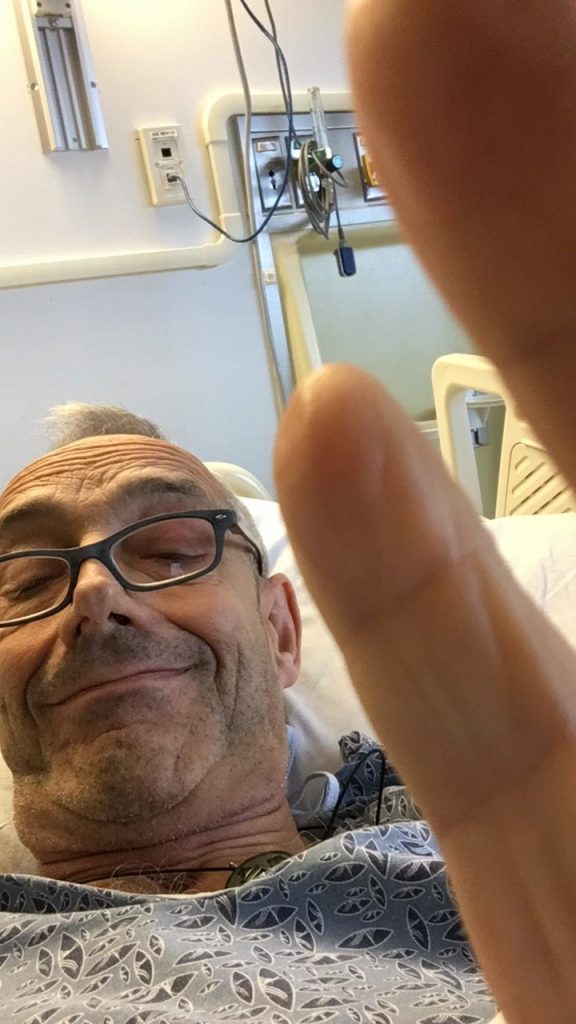
    Slowly slowly the pain decreased as a result possibly of some Tylenol and being prone on my back. To the extent that I gave a doubtful ok to the limited expedition plan. But in the car, despite the beauty of this wonderful lakeside city, the fires of hell began to build up once again and by the time we got back to the house I knew I would not be flying that evening. I told a surprised brother, and said the only place I wanted to be was hospital.

    2. A VIP Emergency in America

    We arrived at the hospital around 4 on that Sunday afternoon. The Emergency Room at Washington University Hospital has, as one would expect, a waiting area. Tiny. Capacity about twelve people. In the U.K., fifty. Triage happened in about twenty minutes. UK, possibly similar depending on time of day. Initial treatment (a shot of morphine) within an hour of arrival. U.K. Up to 4 hours but I think in this sort of case it may be quicker. 

    The arrival of the Accounts Clerk – the member of the Raptor clan designated to appear in any emergency room in the US with a clipboard and the demand for a payment method – however, happened within twenty minutes of my lying down. Now that doesn’t happen in the U.K. We just assume every patient in emergency is an emergency. First we treat, then we enquire if the person is a British and therefore entitled to free treatment.

    Brother kindly kept me company while waiting for a doctor and a diagnosis and some treatment but eventually (9.30 or so) I sent him home. He had work the next day. I’ve forgotten most of what happened in that emergency cubicle, thanks to the deliciousness of the morphine, so lucky you, no gory details…I know had a CT scan which confirmed the gallstone diagnosis. I know that shortly after brother left I suddenly got terribly cold and began to shiver, shake, go into a horrible shivering fit which felt like it lasted at least twenty minutes. Nurses seemed not very bothered. They gave me blankets – no help, assured me the temperature was 70 degrees. No help. Gave me more morphine. Helped. Certainly no explanation, no doctor. Horrible.

    Then, suddenly, all smiles I was informed that I was being transferred to a ward.

    I must tell you that the most notable difference between the UK and the US hospital is the number of staff. Sheeeeeesh! They paraded in and out of my cell like an endless stream of intensely grinning clones, each determined to outdo the others in spreading lovingkindness all over me. And just as I began to fall in love with this or that carer, he or she would be rapidly replaced by another equally lovable being, who would introduce him/herself as “I will be in your team….” and then would just vanish!

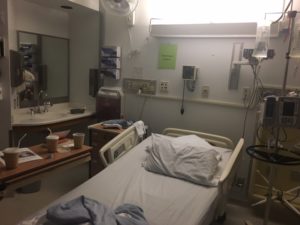
    Which phenomenon continued in my room in the ward. Or rather, my ensuite suite, with its bathroom, tv entertainment centre, its cheery information board and its endlessly loving staff who, should there be any remote chance of my falling asleep would come bouncing into the room at least every hour to tell me that they were my team. All night. Imagine if I had gotten them all together in one room! Sure as dammit that would have to be a helluva BIG room…

    In the morning, two cheery bearded chaps radiating love came in to tell me they are my team, and to announce that a decision had been made to do another MRI to investigate the situation in more detail. Should there be doubt, they would send some tubes down my throat to find out more, and if necessary they would cut out the gall bladder and feed it to the pigs. Or not. Knowing I would never see either of them again I sadly consented to this strategy and waited. 

    Which gave me time to reflect on the intensity, sincerity, complexity and utter luxury  of my treatment. There can be no doubt I was receiving a massive amount of attention, and at last I realised why. Of course! Brother is (holy word) Faculty. A Professor of this Institution. A legend, in fact. Probably the leading Rheumatologist in his field. Worldwide. So no surprise then that people flooded into my room to see the legendary brother of this legendary figure and hopefully to leave such a good impression that I would not hesitate to commend them to the Prof.

    And there I was thinking it was my charm and my accent…

    Much later (around 4) I had my second MRI and much much later the results – the stone had gone. Been expelled. Yes there was “mud” left behind which is likely to turn into a stone some time in the future (50% chance within two years) and I am recommended to have the gall bladder removed within 6 weeks. A remarkable recovery.

    And I wonder this: did the shivering fit somehow shake that stone loose? If so, nice one Immune System! Proud of ya.

    Returned now to Brother’s house feeling shaken and stirred and determined to avoid all puns with the words “gall” and “galled”. I’m flying to San Diego tomorrow and London on the weekend. My hoped-for trip to India is probably off, as I will have to get the NHS to do some cutting soon – and I certainly don’t want to be caught with a gallstone in Mumbai or Varanasi…

    Now that would be galling!

    (Sorry)

    FIND OUT WHAT HAPPENED WHEN I RETURNED TO NHS CRISIS BRITAIN! and discovered how Donald J. Trump is making political capital out of it….

    http://jonelkon.com/is-the-nhs-a-mess/

    …and then

    http://jonelkon.com/nhs-stress-and-duress/

  • Letter from California 1 – Into the Golden Land

    Letter from California 1 – Into the Golden Land

    In the Air

    There is no more fantastic than this

    This pent up portent this
    Conveyor of life and 
    This endless roiling this
    Shredded heaven which
    Layered between ground and infinity
    Separates us
    From dust
     
    Searching for Mother

    A sliver of land on the edge of Mordor, this golden-kissed paradise of innocents, the last vestige of civilisation in the land, this remainder of the real ideals of a land engulfed in the roiling fury of fascism and dictatorship. And between these two peoples, a massive rift, geological as well as ideological. California the Golden clings to the landmass of North America by happenstance, by luck, the intense friction between plate and plate holding this strip of sybaritic sweetfulness still, for now. To the east, bristling with bweaponed dull-eyed beasts, followers of the Swamp King, armies of rabid slavering fiends gather and shout their war cries. To the South, drug barons kill without mercy, all who give allegiance to any but themselves. Blood runs in the streets and the very earth rocks and shakes in its attempts to shake these pesky humans off its bruised and battered surface.

    To the West, only Ocean. Here there is an appearance of peace, where marine creatures navigate warily between swirling mists of plastic and faeces.
    And to the North, badlands stretch for miles through territories where souls are bought and sold on the toss of a dice. But should a traveller, suitably armoured and brave, keep on the northern journey eventually a land of refuge lies cold but warm-hearted, like a beautiful crown perched on the head of a monster. Somewhere on the border I have a brother. I can flee to him if there is danger.
    My journey to the Golden Land has to be with stealth, here in the stench of this cigar- shaped airship in which I hide amongst other sardinned humans, not very different to the slave ships which made this same journey two hundred years ago. The difference is, we’re paying for this. We are unlikely to be sold when we arrive, and we may even be welcomed.
    For me, I have embarked on this adventure with a sense of fatalistic sorrow, the mission, to find my mother. Oh I know where her body is, my sister keeps it safe. But the mind has disappeared, leaving only traces, clues, clouds. And even though I know this search may be futile and my mission may fail, it could be worth going to the Golden Land just to find out. For the last time. If I have, or ever had, a mother.
    ******
     
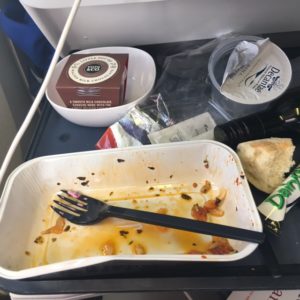
    Positively the worst airline food ever ever ever. Spiral pasta with a pinch of “pesto”. A tiny plastic bowl with a small splurge of red cabbage. A chocolate tub – I don’t eat chocolate. About the size  of a Yakult.  Everything in a flurry of plastics, bowls, cutlery, tumblers even the dwarf-sized “bottle” of Tempranillo is plastic. All soon no doubt to join the plastics and sewage swarming off the Californian coast like schools of detritus animated by currents almost slowed to a stop by the weight of it all. A Sargasso of sludge, which one day may just become heavy enough to activate that San Andreas fault.
    Suddenly over America
     
    There is no more fantastic than this
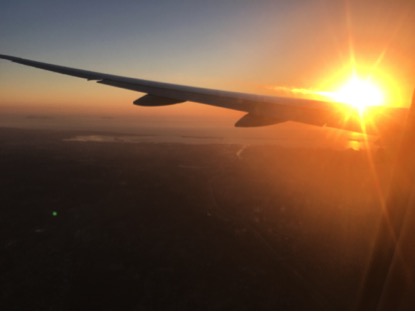
    Suspended in air growling progress over half the Earth
    And beneath us this brown crinkled like the skin
    Of a centenarian aborigine through
    Binoculars this fault-formed fastness
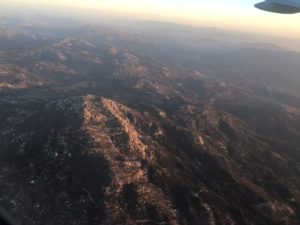
    where earth coughed and sputtered and threw up crags valleys lines of folds
    With sudden lakes and also  
    Scratched lines where rivers
    Have forgotten to roam
    A thousand years ago
    And the blue of the river like fathomless shadow
    Is the heart of this nation so 
    Arid and empty?
    Then no wonder they cry so often
    Look at ME! This is ME!
     
    Between us small cotton clouds throw stains of darkness down
    Like fake lakes
    Ah! A town
    A clingy little spattering of us
    Laid out like a defiant
    Attempt to cry, see! It’s me! Here!
    In seconds lost beneath the wing.
    Little lives, of thee I sing.
    Suddenly and uncontrovertibly
    Green River
    Blacks Fork
    And ahead, King’s Peak.
    America’s nothingness…
    And ahead, Yellowstone River
    Where bears live. 
    And the blue of the river like fathomless shadow
    Utah now, here the Mormons 
    Lie, lie, lie. Here safe from sanity
    In this moonland of ups and downs
    These victims of their founder
    Founder.
    Mind you, if they wanted a God
    They may as well have made him here
    Where the land and logic part company
    Wow! Red-accented mountains!
    Lined up and curved as if remembering
    A sea that once
    Carved into crags 
    These rock teeth
    Now
    This
    Lovecraft landscape of a fractured mind
    Unimaginable horrors lurking in the crags
    Breeding in the caves
    Hunting from the cliffs
    Predators of dreams
    And then suddenly
    Sand.
    With habitation!
    Why?
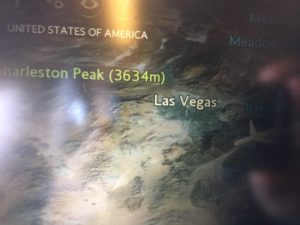
    Las Vegas, says the Captain, is on the right hand side.
    Where on Sunday night 59 people died
    Murder by madness
    and stupidity. 
    And we, along with 250 others
    Were all injured
    I feel it from here
    And only half an hour from Golden California
     Mountain islands in the sand
     
    Still these mountains
    Still this still
    Desert
    We will cross, soon, that rift where two
    Plates grind each other, slip
    Now and then as the continent tries
    To shrug California
    Into the Pacific Ocean
    Perhaps here
    Descending now, this fabulous eyrie
    This privilege denied millions who died years ago
    And millions alive too
    Who never flew
     
    California, El Zahav!
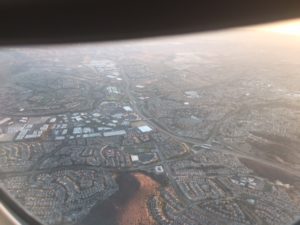
    Suddenly green
    Imported water makes green land
    Gold
  • Bleeding America – why the pro-gun arguments are bleeding nonsense.

    Another mass shooting! Like you, I went through all the stages of bereavement – from horror, pain and sadness right through to anger. Then the search for someone to blame.

    And another bruising Twitter battle with gun-supporting Americans, some of whom are really Not Nice people. (one of whom, by the way, retweets all the “liberal” tweets he doesn’t like, so that his followers – all techie right-wingers, can proceed to troll or send viruses to victims. So if I get trolled or viruses I will know the source.)

    Here I sum up their arguments, and why they are wrong. Frankly, having seen and heard (in the media) all the pro arguments, there are NONE that stand up to logical scrutiny. I will not cover all the arguments – so please, any I’ve forgotten, let me know.

    1. “If guns were banned criminals would always be able to get one”. True. In the UK, many criminals are able to get guns. But the difference is, they can be arrested for merely possessing the weapon! This means that if the police have reason to suspect someone is a criminal, they can search the person and arrest him/her if carrying. Also, they can stop and search. The result is that gun crime in the UK is a tiny percentage of the US! Also, that word “always”. No, the law makes it difficult. So a person will find it hard to get a gun on a whim.
    2. “Gun owners would fight to keep their weapons”. Some would! But a very powerful publicity campaign and a commitment from the authorities would ensure most weapons are handed in. The key example is Australia. Their amnesty and confiscation programme has saved hundreds if not thousands of lives.
    3. “I need a gun to protect myself and my family” see 1 above. If your gun is taken away and criminals can’t carry, everyone is safer. Also, this will take a huge burden off law enforcement eventually, save money and resources which can be used to protect the citizen.
    4. “I am a responsible person who never harmed anybody. Why should I give up my gun?” Everybody is not as responsible as you. People get drunk. Or drugged. People get mad with someone else, maybe a cheating partner or lying friend. Young punks go out for fun and rob gas stations. And sadly, some people have severe mental illnesses like psychopathy. So give up your gun so that we can make it difficult or impossible for those less responsible than you are to kill on a whim, or in fury, or drunk.
    5. “If they can’t get a gun they will get another weapon. Or a bomb.” Sure. But you can’t kill nearly as many with a knife, say. In the UK we have had some horrific knife attacks. But the numbers killed or injured were tiny compared with the potential for mass murder of a gun, especially a semi-automatic weapon. As to bombs, sure. Very scary. But it takes some research and skill to create a viable bomb, and there is many a slip between buying the components needed and setting off a bomb in public. Bombers frequently blow themselves up, or are detected before they can cause mayhem, or they create bombs which don’t work. I don’t propose detailing all the recent examples. If you are aware of the news you know what they are.
    6. “It’s my right according to the Second Amendment of the Constitution.” The Second, written in 1791, says: “A well regulated Militia, being necessary to the security of a free State, the right of the people to keep and bear Arms, shall not be infringed.”. Written in 1791! When the USA was under threat from the British, when there were dangers all around. Hence, “The Militia.” Well, in the Bible (Leviticus I believe) we are told to stone adulterers, amongst others. This instruction was AMENDED by the fellow Jesus, who said, let those without sin cast the first stone. He amended the Old Testament.  So the Amendment now needs to be amended. “Amend” means “make minor changes to (a text, piece of legislation, etc.) in order to make it fairer or more accurate, or to reflect changing circumstances.” So amend this Amendment!
    7. “If you ban guns you need to ban alcohol or cars, because they kill people too” Answer this then: Are either of those specifically manufactured in order to kill or injure? If your answer is no, the whole argument collapses up its own bottom.
    8. “But I LIKE guns…” Actually I understand that. I have a couple of antique black powder weapons myself. It’s about 200 years since they were fired in anger and I’m sure if anyone was stupid enough to stuff gunpowder down those muzzles, the person concerned would have devised a damn messy suicide. Guns have an attraction which is seminal, deep, disturbing. It’s definitely more of a boy thing, it’s a penis substitute or extension. So my message to people who find guns “fascinating” is buy some really old ones. They carry their murderous history in their dead wood and metal. But thank heavens their murdering days are over.
    9. “Sport” – Hunting. Killing for meat. Well, this horrifies me as a recent convert to vegetarianism. No modern human in an industrial society with high GDP needs to hunt. Is it thrilling? Possibly. But it’s only FAIR if the beast hunted is also armed with a weapon, has the intention to kill humans for meat and has all the technological resources a human hunter would have. Target shooting? Well, that encourages gun-loving. But maybe in very controlled conditions, with the guns only provided for that specific sport, and kept locked up by the club in a tremendously secure place like an arsenal. I have my doubts about that.
    10. “Jobs and revenue depend on the arms industry.” True. And horrifying. The huge revenue from arms sales in America and Britain is a massive blot on our civilisation. As a result of this business of death, the pro-arms lobby, especially the NRA in the USA have huge resources. Their brainwashing tactics, bribery of government, senators, congressmen and entire political parties (GOP in particular) will not be forgiven by the families and friends of the victims of untrammelled guns. The NRA are accomplices in the crime of murder. Every killing with a legal gun can partly be blamed on them. There should be a massive Class Action against this evil group of cynical, money-motivated accessories to murder.
    11. And finally, “It’s not guns that kill people. It’s people that kill people”. No, idiot. It’s people WITH GUNS that kill people. More quickly, more easily and in quantity.

    Is that everything? I doubt it. My conclusion: THERE IS NO JUSTIFICATION ON EARTH WHICH MAKES IT OK TO MURDER. And there is NO JUSTIFICATION ON EARTH TO MAKE IT EASY.


    Illustration: https://www.nytimes.com/2016/06/14/upshot/compare-these-gun-death-rates-the-us-is-in-a-different-world.html

  • Is there a Future for the Book?For me? For you?

    An Agent I met at a writers’ workshop this weekend sighed, picked her pert nose and said, “publishers just don’t take risks any more!”. The main reason being, of course, digital publishing. Kindle, Mobo, Ibooks etc. Even though a recent Guardian article claims there has been a fall in digital sales, their stats are questionable. The dinosaurs of traditional publishing are closing ranks and panicking, in fear of digital apocalypse. Dunno. So today the question I’m asking you is, Is there a future for traditional books?

    When she asked me to name the category I fall into, I was forced to say “literary fiction.” Which means, to read me you have to be smart. But that’s wrong! I say, to read me you only need a sense of humour; to be tickled by the bizarre and the insane. And when I showed her my portfolio of work in progress, she said “You work with big ideas”. Wtf? I think she meant, basically, as far as plots are concerned, you don’t do anything normal. Darn right. Even my little Sally, housewife from the suburbs, rapes a man, does a casual murder and steals some drugs. Which was what led her to say “publishers won’t take risks any more.” So that’s what I am, a risk. Me and the rest of new writers producing literary fiction. Original, perhaps bizarre, experimental, different, daring work. Work that plays with the brain. There is nothing more boring, as I’ve told pupils many times, than normal.

    The categories of books that line up in the Boring Lists fall under two main headings: Richard and Judy and  “Book Club”.  So what do they include? Well, thrillers, chick lit, which is a sub-category of “women’s’ fiction” crime,  cooking, millions of those accursed Celeb Biogs, established authors…historical fiction, if it’s by big names, will always sell. Poetry? Forget it! Even Faber won’t consider a new, unpublished poet.

    The WH Smith bestseller list this week has a story to tell. (https://www.whsmith.co.uk/chart/books/fiction-02×08974) The number 1, Victoria Hislop’s Cartes Postale from Greece looks suspiciously like Women’s Fiction. Two (The Couple Next Door by Shari Lapena)  is a Thriller. Three and four, both Women’s Fiction. Then Crime, Thriller, Women’s, and on and on. If Proust or Vonnegut or Sharpe were writing today, would they be on the WHS Bestseller list? Would Dickens? Would a publisher nowadays “take a risk” on Shakespeare’s Sonnets?

    I don’t see a great deal of humour amongst best-sellers. Unless, of course, it’s by a celeb.

    On Amazon the king of kings is Jamie Oliver. That boy can sure sell! https://www.amazon.co.uk/Best-Sellers-Books/zgbs/books. Le Carre’s Legacy of Spies comes second. Bully for him! I happen to think he’s not just a good writer, but a good man too. Number 3 is This is Going to Hurt, by Adam Kay. Subtitled Secret Diaries of a Junior Doctor, this is obviously reality TV in book form. Then comes a surprise – JB Priestley’s An Inspector Calls. Hey! An author from Back in the Day. A seriously classy writer. Did I miss an adaptation on the box? That’s usually the reason for the re-issue of a classic.

    And tomorrow? There are people who see a resurgence in Real Books. They remind me of those beautiful people who keep predicting that vinyl records will rise from the grave. And to some extent, they have! People are actually buying turntables and it’s very trendy to invite guests to admire your repeating grooves. But you visit hipsters these days you may well be unsurprised by the total absence of bookshelves, unless they are there to display decapitated herrings or artwork made of rabbit shit or blood. Were you to ask them if they ever read books, they may direct your attention to the Kindle in the corner, covered in spiderwebs, discarded beard wigs and dust.

    Ah, so whither Literary Fiction (capitalised to show respect)? Classy, original, demanding, delicious Literary Fiction? I suppose mostly dropped like a stone into the echoing vacuum of Self-Publishing. (Vacuums, btw, are silent. As a writer of Literary Fiction I have the right to fuck up metaphors.) (My vacuum has echoes. And the cries of frustrated egos) To moulder and die with all those narcissistic autobiographies of sweet little old ladies who once met the Queen.

    Well, what the hell. Me, I will continue to throw my madness down the well of nothingness until somebody notices. There are people I know and respect a HELL of a lot who like it. Like you. And maybe one day there’ll be more. I am reminded of that Irish bloke who only ever wrote one book, and I can’t remember the damn title even though I read it and loved it years ago. He tried and tried to get a publishing deal and couldn’t, so he killed himself. And his mother, bless her, got a deal and the book became a major classic of the genre. £5 for anyone who can remind me of the title, I want to read it again.

    So I’m shouting into the vacuum…..helloooooooo….anyone in there…….????

    (You’re going to LOVE my next book!)

  • Intermezzo

    Extract from a novel in progress by JON ELKON

    Alfredo Capodimonte came from a family considered amongst the aristocrats of the opera in Italy. As producers directors and managers at the Scala in Milan, at Rome and Verona they had been amongst the most famous of their day for at least three generations. Capidimontes it was who first saw the genius of Raimondi and Gigli, who launched the careers of Mascagni and going further back, Bonaventura.

    So now we must take you back thirty years, to the turn of the twentieth century. Carlo Capodimonte was one of the most successful opera directors ever, and was in constant demand to direct operas at the greatest opera house of them all, La Scala in Milan. Known to all as Da Capo, his successes were legendary; his production of Aida and Ballo in Maschera won screams of approbation from audiences and critics alike. He was feted by all, and could do no wrong.

    But then, disaster.

    Signor Giacomo Calvi was a banker in Milan whose love of the Opera was expressed in his frequent visits to La Scala and his extraordinarily generous gifts to that institution. As a major donor he was given access to all sides including backstage where one day he met Capodimonte and confessed his dark secret: Garibaldi. His Magnum Opus. A Grand Opera in four acts. The obsession of almost twenty years, which he had kept a great secret from everybody, even his piggy wife. (His original decision to concentrate on composing an opera, by the way, was a response to her constant miserable persistent nagging. Usually for sex, an activity he detested. He was safe behind the locked door of his study.) Until today! Because at last he had finished it. Which was why, filled with the thrill of creation, he sought out the greatest director of the day.

    “Yes of course Signor!” Said the Capo. “I will look at the score and give you an opinion. But I warn you: if it is rubbish I will say so!”

    Of course it was rubbish. It was ordure. It was melodramatic romantic shit of the worst sort. The plot was horrible: Garibaldi takes time off from uniting Italy to fall in love with a maid in the house of the King of Naples but she is secretly his daughter and is in love with a handsome knight who is in love with…and so on. The same tosh you get in so many Baroque operas.  At least so many of those are made divine by wonderful music! In Calvi’s case, sadly not. To make things worse, he was determined to “revolutionise” the orchestra by the replacement of the entire string section with saxophones, the only instrument he could play. When the Capo read the score, he cringed in terror at every note.

    Most unfortunately, before he was to meet Calvi to tell him what he thought, he met Dragi, the Chairman of the Board at La Scala. Brimming with deviltry and delight, he began to tell this august gentleman about this Monster. “You would not believe how bad it is!” He said. “Everything! From libretto to score to orchestration…”

    “It isn’t.”

    “Pardon?”

    “Signor, listen to me. This opera is not terrible.”

    “You have seen the score?”

    “No.”

    “Then how can you – ? “

    “Signor Calvi keeps this Opera House from total collapse.”

    “Collapse????” Capodimonte’s gaping mouth could have admitted an entire gilded sky chariot with Apollo in charge.

    His brain churned as his mind boiled. In his mind’s eye he saw the grand lifestyle of Signor Dragi – the carriages, the mistresses, the houses in Paris, Vienna and Prague. Not just Dragi – the entire Directorial Board seemed to see it as a duty, and a reflection of the success of the opera house to live lifestyles of extreme luxury and even debauchery. They also paid him very generously as if he was expected to do the same. So out of respect for his employers he wasn’t slow to take on a vast array of mistresses, and indulge in some gambling too. In his mind’s eye he saw the frequently full houses, the lines of people desperate to see the hugely elaborate productions La Scala was famous for. And in his mind’s eye he saw liras, liras flowing out of the cornucopia that was the generosity of men like Calvi.

    Largely into the pockets of men like Dragi.

    For the first time in his life he met the Real World, and quite frankly he didn’t like it.

    “……Signor Dragi, what must I do?” He asked, desperately.

    “Listen to me. You will tell Signor Calvi his score is brilliant, but of course will need some changes and fixing. You will offer to find a wonderful composer to do this. It will take a long time.”

    “Yes.”

    “A very long time. Years perhaps.”

    “I see.”

    “And then you will tell him how hard it will be to get wonderful performers of genius who are good enough to take on this work of genius,

    “Yes.”

    “And then, to mount such a production, to design such a production, to rehearse this – genius – work… do you get my point?”

    “Will take years.”

    “Exactly.”

    “Years. I will tell him.”

    “And then we will see which comes first: the production or his sad demise.”

    “Brilliant Signor!”

    “And if that doesn’t work we will have him killed. No doubt La Scala features prominently in his will.” He laughed.

    Capodimonte laughed nervously.

    “And you don’t worry dear Carlo. Whatever happens, I will take the blame. Ok?”

    And so, filled with righteous apprehension, Capodimonte went off to see Calvi.

    “Well?” said Calvi. “I hope you can see the genius in my work?”

    “Without a doubt Signore. The concept is very – high. The plot is very – original. The music is certainly different….”

    “Different?”

    ‘The saxophones. Very – interesting.”

    “Interesting?”

    “Indeed Signore. I believe –

    “It will cause a stir.”

    “Oh, it will that!” Capodimonte said, “It will that!”

    “Good. I propose you get me a cast, arrange a date with the Opera, begin rehearsals! I am very excited!”

    “Certainly Signore, we will do that. There are a few changes and edits I will need to make to the score – “

    “What! You will not touch one note!”

    Capodimonte shrugged. “It is usual for a director to make some changes, adapt to the production – “

    “You will make not ONE single change. I have worked for twenty years on this score. Every line, every nuance, every note has taken my sweat and tears. This opera will be produced and directed and seen precisely as it appears in my head, in my dreams.”

    “ – Signore – “

    “I have even decided the cast!”

    “The cast…”

    “And soon. Very soon. You will tell Dragi. I want the first production six months from now.”

    “SIX MONTHS!”

    “I don’t care what is in the schedule. The public do not need another bloody Puccini nonsense. Or stupid Verdi camels. They want history, patriotism, exciting modern music. And they want it now. Understand?”


    And so the legendary production of the Grand Opera Garibaldi by Giacomo Calvi came together like a modern motorway pileup. The lead roles were sung by hideously overweight aging stars, some of them retired, because Calvi had idolized them in his youth – and had “always” visualized these has-been stars in his Magnum Opus. The sets were hastily and horribly assembled. Rehearsals were continually disrupted by Signor Calvi who invariably sat in the stalls with his saxophone, always ready to adapt, correct and guide the singing or the playing by what Capodimonte came to call contemptuously The Orgastra.

    Incidentally, three mysterious attempts to assassinate Calvi took place during those six months – each one frustrated by the wall of armed men allocated to him by his bank. These men accompanied him everywhere he went. In rehearsals they would applaud every aria, almost every note of what they apparently delightedly called Garry Boldy.

    By the time the Opening Night finally happened, the Opera House was packed to the rooftiles. The press had built up a fervor – “The Great Capodimonte’s Thrilling New Discovery!” “Banker banks on Capodimonte!” “La Scala Banks on Banker and Da Capo!”

    The curtain opened, and from then on the stage of La Scala became one of the most famous Natural Disasters in history. It eclipsed the eruption of Vesuvius. It made Noah’s Flood look like a mere dribble of sputum from the lips of a child. And as you would certainly have predicted, Capodimonte’s career was destroyed for life.

    So what about the vaunted support the Chairman of the Board had so generously promised him? Alas, that venerable gentleman died of syphilis, alcohol and opium two months after the discussion with Capodimonte. And as for Calvi, well he went home, shot his piggy wife (he had wanted to do that for twenty years) and then himself.


    Carlo Capodimonte himself went off to found a company producing porcelain and pretty figures and eventually made some money out of it. He never set foot in an opera house again.

    Back to 1929.

    It was Carlo’s son Luigi who now sat in the first row of the stalls at the Berne Opera House, listening to the ghost of the applause that had followed all his father’s productions before the Calvi catasrophe. And watching as a magic boy made magic sounds like bells, ringing an encore for the Capodimontes.


    Because everybody has a backstory, I frequently pepper my narrative with how my characters got to be there, in the story, and also – more importantly, why.

    And so, my story is actually about this Magic Boy, Guido, and his rise as an opera star and perhaps, a serial killer. Luigi Capodimonte becomes his manager and his Svengali…

    A tale of joy, killing, and castration…coming soon (well, that last phrase could give rise to a stupid pun. And so could that last sentence.)

  • Sally’s Road – Sample Chapter

    Sally’s Road – Sample Chapter

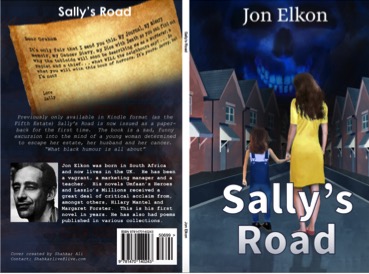
    Sally’s Road – the paperback – is mere weeks away. So here for you, beloved friends, is a sample to whet your appetite. Hopefully! It is a tale of cancer and the defeat (?) of cancer. From the stifling suburbia of middle England to the beach of Rio, Sally’s Road takes her through kidnapping, murder, rape and theft – and finally ? This is deeply black humour, combining the funny, the silly and the tragic.


    Sally’s Road by Jon Elkon

    CHAPTER FOUR


    Yesterday was a particularly lovely, clear, crisp early Spring day, quite unnaturally warm, too. The daffs are well out now, and the lawn is starting to look less like an inept hair transplant.

    I was waiting for a chicken to cook, flopped out on a lounger wishing the sun was hot enough for me to get a tan, languorously scanning the Sunday Independent, while Graham was new-mannishly chopping vegetables in the kitchen.

    Well, when I say I was reading the paper, let’s be honest, my mind was on less wholesome things. Like Tom Meld next-door who had removed his shirt to drag a clackety lawnmower over their weeds. I know he’s no good looker, this Tom, but at least he’s slim. Wiry, muscles sticking out of his pinked flesh. And I was wishing that I had a muscly, young, different man.

    It was a sort of ‘ifonly’ thing, not serious, after all I’m still attractive, even at thirty-five. I’m slimmer than I used to be, I look quite good nude. Oh, not quite a firm as once, but still the right shape.

    I have always thought of myself as slightly – good old word – plain. At school, and even after that, at the Poly – I always had stunning-looking girlfriends. They were all men-magnets, jolly come-and-go girls. I was the one who’d get the sincere men, the save-the-world men. And, of course, the married men.

    Which is exactly why and how I got landed with Graham, I suppose.

    He certainly seemed a good idea at the time…my years of passion with Barry – passion on my part, convenience on his – had led to nothing like the permanence he always promised. (Strange how – because I couldn’t have him, perhaps – I actually wanted to spend my life with that man.) The bastard will never leave his wife. He’s far too weak. I believe – even now – that Barry really genuinely loved me. That’s the reason he was so angry with me so much of the time. He resented me for having allowed/made him love me. And the threat to his cosy home and family.

    I met Graham through Barry.

    They were good friends. Graham was such a trusted friend Barry let him meet me. And when I was really vulnerable one night – old tale, don’t want to write about it – Graham took me to bed…Trusty old Graham!

    I have long suspected that Barry introduced me to Graham in the hope that G would free him from me. Paranoia? It could have been subconscious, of course. MAYbe.

    I wonder if they ever discussed it, the way men do, ‘Do feel free to take her, good fellow, it won’t be for long and you’d be doing me a tremendous favour…’

    No no no! None of that!

    I was telling you about yesterday afternoon, wasn’t I?

    I was startled out of my reverie by a ‘Psst!’

    The Psst was coming from the back fence, from the Lake Walk. I dropped the newspaper on the table and ambled to the fence. I was expecting the psster to be the girl from next-door on another Mission.

    It was Joan, half-crouched behind the ill-grown hedge. ‘Quick! Over here!’ she whispered urgently.

    I peered through the picket fence and struggling privet. ‘Hello Joan. Going for a walk?’ I asked. ‘It’s a fine morning. Why don’t you come in?’

    ‘Don’t be silly dear, there’s no time for tea. Where’s the husband?’

    ‘Uh – inside. Chopping vegetables.’

    ‘Good. Pretend you’re looking over the fence. Enjoying the view.’

    Bemused, I pretended to enjoy the ‘Lake’ – a muddy pool of water which lay dead over what had been a slagheap, the surrounding concrete path, the sickly trees which leaned desperately away from the stagnant water. ‘Why?’ I asked.

    ‘Never mind why. She’s visited, hasn’t she?’

    It sounded a little like an accusation. ‘She? You mean Jean Tweed?’

    ‘Yes her. What did she have to say?’

    I realised that it would be a good idea to humour her. ‘Well, she was talking about her daughter – the funny one, looks a bit like a garden gnome – ‘

    ‘Yes yes, the one they call Annie. And – ?’

    ‘That’s right. She tried to tell me, I suppose, that the girl is quite mad and I’m not to believe a thing she says.’

    ‘It’s disgusting!’ Joan ejaculated, as if her worst suspicions were confirmed.

    ‘Those weren’t the actual words,’ I said in mitigation.

    ‘You had better come with me.’ Joan said grimly. ‘Come on, you can climb over the fence easily enough.’

    I wasn’t too keen on this undignified operation. ‘What about Graham?’ I asked, ‘I can’t – ‘

    ‘There are far more important things going on here than your blasted Sunday Roast, girl. Come on, lift yer leg!’

    I couldn’t refuse, could I? She’s born to command, I thought, hitching myself carefully over the fence. I wonder if that means I’m born to follow, I thought with a sigh, remembering all the times I’ve trailed after people in the pursuit of things I considered unnecessary or dangerous.

    ‘Now keep low,’ she whispered hoarsely ‘and follow.’

    We slunk like guerrillas along the fence for a few yards, until we were at the back of the Tweed house. ‘Very quiet now,’ she whispered.

    We waited in silence for about a minute. The Tweed’s garden was deserted. Birds sang throatily, unconcerned and dispassionate.

    ‘Morning Joan gel!’ The hearty voice made me jump.

    Harry Frost stood on the path grinning down at us, a ragged terrier at his heels.

    ‘Good heavens Harry you made me jump,’ Joan complained.

    ‘Sorry and that,’ he said with a bemused grin. ‘On Obbo, are we? Nice morning for it!’

    The Major was dressed in ill-fitting blue jeans and a cowboyish plaid shirt, sleeves rolled up over white-haired forearms. His absurd moustache was sprinkled with a decaying portion of his breakfast.

    ‘Exactly. And we’d appreciate it if you’d buzz off a bit before you ruin everything. There’s a good fellow.’

    ‘That’s a bit radical,’ Harry said, obviously offended. ‘I want to play too! I’ve had a great deal of experience in these matters. Did a lot of slinking about in Burma. Jungle warfare stuff.’

    ‘Oh don’t give me all that!’ Joan said with a sniff, ‘You drove trucks and ordered men about at Aldershot.’

    ‘That as well, madam, that as well. I promise to be good – ‘ He dropped to his haunches beside us and the dog did a round-robin of face licking.

    ‘We would be better on our own,’ Joan grumbled, although she had evidently accepted defeat.

    ‘I’ll be quiet as a moose.’

    ‘A moose?’ I said, beginning to grin. I like the man. He’s clearly quite as mad as Joan, though in a different way.

    ‘Morning Mrs – uh. Didn’t see you down there. Nice day, eh?’

    ‘Very nice,’ I said dryly.

    ‘Hush you two!’ Joan commanded. ‘Something’s happening.’

    Something was indeed happening in the Tweed house. There was the sound of a door slamming, and Jean and Allen Tweed emerged onto the patio.

    ‘It looks as if Spring has finally sprung,’ we heard Jean say. ‘Of course it’s too early to really tell. Last time I decided that the frosts were over we lost half the garden.’

    Her husband muttered something inaudible.

    ‘Get the chairs out dear will you? We can have lunch alfresco.’

    He replied half inaudibly, though I caught the words ‘ozone layer’ and ‘skin cancer’. She interrupted with a sharp ‘Get a move on dear, don’t argue.’

    ‘Down!’ the Major commanded suddenly, as, with an arm around our shoulders, he forced us onto our knees. Privet pricked my cheek.

    Whistling laconically, Jean Tweed was making her way down the gnome-strewn path to the fence. ‘Morning,’ she said casually, peering over the fence at the absurd trio, ‘Nice day!’

    ‘I swear,’ said Joan with dignity as she struggled to stand up against the still-restraining arm of the Major, ‘if I hear that phrase once more I shall spit!’

    ‘Well it is, isn’t it?’ the Tweed chirped.

    I could have exploded with embarrassment. The Major, on the other hand, had determined only to give name, rank and serial number.

    Joan was quite unruffled. ‘Very well, I accept your remark,’ she said, as if making a reluctant concession.

    ‘Looking for mushrooms?’ Jean Tweed asked sardonically, ‘Quite the wrong time of year you know.’

    Joan gave a mannered, casual laugh. ‘Really,’ she said.

    There was the sound of cast-iron being scraped across patio. ‘Well, you’d better hide again. Here comes the Slug.’ She turned and strolled away toward the house, where her husband was extracting heavy chairs and tables, as if the encounter had been a perfectly ordinary and matter-of fact occurrence.

    ‘All right, ‘ said Joan, ‘get down!’

    ‘What?’ I whispered, ‘I think I’d better get home…’

    ‘Don’t think!’ the countrywoman whispered hoarsely, ‘Just listen!’

    ‘She’s right you know,’ Harry said, ‘Gel knows best.’

    ‘I’m getting heartily sick of all this!’ Allen Tweed’s voice floated over the fence. How much longer? I feel like a prisoner in Colditz. Never knowing when the war will end. All my escape attempts fruitless. I tell you – ‘

    ‘Yes dear. Bono.’

    ‘What?’

    ‘You heard me. Isn’t it a lovely day?’

    ‘Yes dear, it’s a lovely day. But don’t you understand? This is exactly what I mean!’

    ‘Aren’t the flowers lovely. Look at the dear daffodils coming up. And the crocuses. And listen to the birds singing away. Aren’t we lucky?’

    ‘Lucky.’ he echoed.

    ‘Lovely house, lovely family. Really, we have everything we could ever want in life.’

    ‘Everything’ he echoed again.

    Allen Tweed and I were obviously soulmates. But why? WHY was I being forced to listen to the private (and, I have to add, deeply boring) conversation between our neighbours? I began to feel that unless I extricated myself from this knot of spies, I would become truly claustrophobic. So when I heard Graham’s voice calling my name from our garden, I shook myself loose and, muttering, ‘I have to go’, I crawled off toward my own house.

    ‘She leaves just as it’s getting interesting’ I heard Joan mutter as I climbed over my own home fence.


    *          *          *          *          *          *


    ‘Oh there you are,’ Graham said cheerily as I entered the garden in my undignified fashion. ‘We’ll have a gate put in for you dear, if you want to walk along the lake…come,’ he said, beckoning conspiratorially, ‘we have a guest.’

    ‘Guest? Who? Where?’

    ‘In the sitting room,’ he said, and winked.

    And there she was, sitting prettily on our sofa, in a pink, flouncy party-dress. There was a smear of lipstick on her mouth. ‘Annie? Good morning,’ I said.

    The contrast between this picture-book child and my visitor of yesterday was almost incredible and I had to say something. ‘Are you off somewhere special?’ I asked smiling with what I hoped wasn’t amusement, ‘Aren’t you looking smart!’

    ‘You’re talking to me as if I was a child!’, the child complained.

    ‘I’m sorry,’ I said and sat in an armchair. ‘Well! How about a cold drink of some sort?’ Then I added mischievously, ‘or would you like something stronger?’

    Annoyance flashed briefly across the girl’s face. She didn’t like being made fun of. ‘No, not at present,’ she said, keeping her composure. ‘I came to talk.’

    ‘Well,’ said Graham, leaning against the door jamb, ‘Is this women’s talk or am I allowed to listen?’

    ‘What do you think?’ Annie turned to me for an opinion.

    ‘No no,’ I said, ‘it’s up to you.’

    ‘I don’t mind, as long as we can trust him’, she answered, as if Graham wasn’t in the room.

    ‘Oh absolutely!’ Graham spoke with indulgent good humour, and just for a moment, you know, I had a pang of doubt. I can’t explain it.

    ‘All right then, listen.’ The little girl spoke low, with an intensity I have never seen before in seven years of teaching. ‘I suppose I am going to tell you the whole story.

    ‘My name isn’t Annie, to start. It’s Mary Dyne Fortesque.


    ANNIE’S TALE


    ‘I was born into a lovely family, eighteen years ago. Oh don’t look so shocked, I know I’m small for my age! But small as I am, I have the heart of a young woman.

    ‘My parents were wonderful people. Father did something or other in the City and my mother had fabulous bridge parties all the time. We were the toast of Hampshire. Balls, coming-out parties, we had everything. Father was terribly rich, you know. Rich as Croesus. We had a Rolls Royce. Grey with a number plate that said RIC 1 H. Because Father’s name was Richard and he wanted everybody to know how rich he was.

    ‘Anyway, when I was fifteen, both of them were killed when the Rolls, driven by our drunkard chauffeur Alex, went out of control and fell off one of the Chilterns!’ She paused to check our reactions. I placed a look of horror and concern on my face.

    ‘It was terrible for me’ she sighed sadly. ‘I’ll never forget the day when Alex came into the house, covered in grease and grime, the steering-wheel of the Roller still clutched in his bleeding hands, to give us the awful news…’ the child wiped a tear away with an impatient sleeve.

    ‘Terrible for you,’ Graham said. His mouth was pulled down in a parody of sympathy and there was a twinkle in his eye.

    ‘Yes it was,’ she continued. ‘Anyway, my brother Charles and I were left alone for a while after the funeral, until one day they came.’

    ‘They?’ I asked stupidly.

    ‘Yes! The ones who call themselves my mother and father. Mr and Mrs Tweed. He’s my uncle, my father’s brother. She’s his whore!’

    ‘Well!’ I said, about to reprimand her for the word.

    ‘Does that shock you?’ she asked, her eyes now full of tears. ‘That’s exactly what she is. He pays her to pretend she’s his wife. She’s just one of those women of the night, contracted. You see, it says in Father’s will that his brother Allen was to look after us if anything happened to them. But only if he’s married, and settled down. And nobody would ever marry him!’ she said contemptuously, ‘He’s such an arsehole! Oh I’m sorry to swear but that’s what he is. An incompetent, a man who’s failed at everything he ever tried. Do you know, once he was offered a partnership in Virgin Airways, right when it was starting. By Ricky Branston himself. And he refused. Fifty quid was just too much of a risk for him. What a worm!’

    We shook our heads over what a worm Allen Tweed is.

    ‘God knows where he found that woman. My detective says she was a Lady of the Night. An upper-class whore. The sort who sleeps with all the members of parliament, all the Lords and things. And now she’s my pretend mother! Oh doesn’t it sicken you?’

    Graham and I looked suitably sickened.

    ‘I shouldn’t be surprised if they weren’t planning to kill me for my money, or rather, mother and father’s money. The generous allowance they’ve been given to look after us isn’t enough for them…’ she was weeping again and I handed her a paper napkin.

    ‘One thing puzzles me,’ I asked gently, ‘what happened to your brother? What was his name?’

    ‘Oh, Peveril,’ she said with a snuffle, ‘I have no idea! He said he would run off to America, if he ever got a chance…but maybe they got to him first! Probably dead and thrown away into the Thames…There’s only one thing to do,’ she announced, ‘I’m going to run away.’

    This last phrase was said so melodramatically, with such actorish resonance, that I knew the exact territory we were in: Barbara Cartland meets Jean Plaidy.

    I must have shown a trace of disbelief then, because the child suddenly stared searchingly into my eyes and said, urgently, ‘You look as if you don’t believe me.’

    ‘No no,’ I said reassuringly, ‘I was just smiling to myself.’

    ‘Don’t say you don’t believe me, ‘ the girl pleaded, ‘please don’t say that!’ Her eyes brimmed, overran. ‘I’ve been praying and praying that I’d find somebody to believe me. I need your help. Please…please…’

    Her sobs were wracking and consuming, as if she was being washed away by unstoppable waves of long held-in grief. I can’t explain how real her misery was. And I couldn’t help it, I melted. Don’t blame me! I know the whole story is ridiculous, obviously the product of a lonely child with a massive imagination (and too much Mills & Boon!) but at that moment all my cynicism evaporated and I hugged her, comforted her. It felt as if this child had longed for a mother’s affection…and I so needed to give my love to a child. Gates opened… (I have never admitted, in written or spoken words that I might want a child, or children. Never! Though some would say that my decision to become a teacher was a way of dealing with this. It makes me too vulnerable! In the early stages of my relationship with Barry, when he was promising happy-ever-after, I assumed we would eventually end up together and there would simply be two or three children…they would be part of the scenery. But if I mentioned this to Barry he’d go hard and quiet. I suppose now that he was so screwed up by his own miserable childhood that he hated the idea of inflicting the horrible experience of growing up on anybody else.

    (He hated his father. He was the only child in a grim booklined house, where ideas were far more important than emotions, and the Boy was treated as an unnecessary appendage. An expensive and importunate and bothersome idiot. I’m rambling. And thinking, Barry could never accept the idea of me and children because it would be Commitment.

    (I need to ramble some more. When it became obvious that there was no future for Barry and me I did wish – oh, very secretly – that I had a child…and that was about when my Lymphoma was diagnosed…)

    I do like brackets. Parenthesis. Life should have far more brackets. (By the way…)

    It was peculiar, that diagnosis, the first invasion of the Body Snatcher, the Stranger. I had gone to the GP because Barry persuaded me that the swelling of the gland on the left side of my jaw had lasted too long. There was never any pain, just a sort of discomfort like knowing that someone else was in the house, an uninvited guest…

    The GP sent me to the BRI – the Royal Infirmary. I was now officially infirm! They confirmed. I had some radiation treatment, very clinical, quite painless. The swelling went down. Everybody was happy. It all seemed perfectly mechanical to me, very unthreatening. I went to work as usual, told nobody (except the Head; she needed to know why I needed the odd Wednesday off). The Medics assured me that 90% of patients are easily cured. And I thought I had been. Until a year ago, when the lymph-gland on the right side of my throat swelled up.

    Graham knew about my illness when he asked me to marry him. I remember saying, ‘Well you can forget children. If you have any hopes of founding a dynasty you’d better find someone else!’ What I was really saying was, I don’t want to have a child and then have to leave it just as I’m beginning to enjoy being a mother. He didn’t ask me to explain. He just hugged me so warmly, with so much love that I decided then and there to try and love him.


    Sally will discover that Annie is a fantasist, her tale absurd and she is much younger than she claims. Nevertheless, they will form a criminal partnership to travel to Omaha Nebraska to steal a new cancer treatment which may or may not work…and along the way there will be murder, rape and hysterical laughter.
Top